The challenge
Many operators, contractors, and suppliers still manage pipe and valve specifications through spreadsheets, disconnected documents, and manual processes spread across different systems and projects. This often creates inconsistencies in specifications, limited revision control, duplicated engineering effort, and challenges related to compliance, procurement, and collaboration across the value chain. Some operators are managing different assets; each asset operates to its own specifications, standards, and component naming conventions, making it increasingly difficult and expensive to manage piping and valve specifications consistently and efficiently across the organisation. Teams needed a more efficient and standardised way to manage piping class sheets, valve data sheets, material specifications, and project-specific requirements while ensuring that all stakeholders worked from the same verified information.
The Solution
To address these challenges, companies implemented Presight PipeSpec, developed in collaboration with Equinor and modernised into a cloud-based SaaS platform. The solution centralises pipe and valve specifications, revision management, datasheets, and change tracking into one shared digital environment accessible across operators, contractors, suppliers, and manufacturers. With cascade updates, automated change logs, role-based access, and support for standards such as NORSOK, ISO, API, and ASME, PipeSpec creates a single source of truth for specification management across projects and assets. The platform also integrates with other digital systems such as 3D design tools, procurement systems, and digital twins to streamline workflows and improve operational efficiency.
The Result
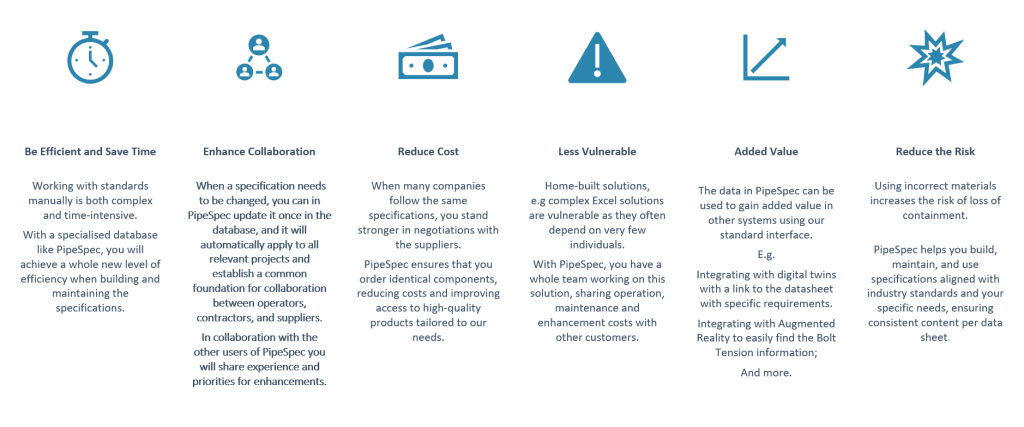
The implementation of Presight PipeSpec has helped organisations reduce manual work, improve standardisation, strengthen revision control, and increase transparency across the value chain. By giving all stakeholders access to consistent and up-to-date specification data, companies can make faster decisions, reduce engineering and procurement inefficiencies, support compliance, and improve collaboration across projects and facilities. The result is safer, more efficient, and more cost-effective operations supported by trusted and verified specification data.